Why Does Gen-Z Love The 90s?
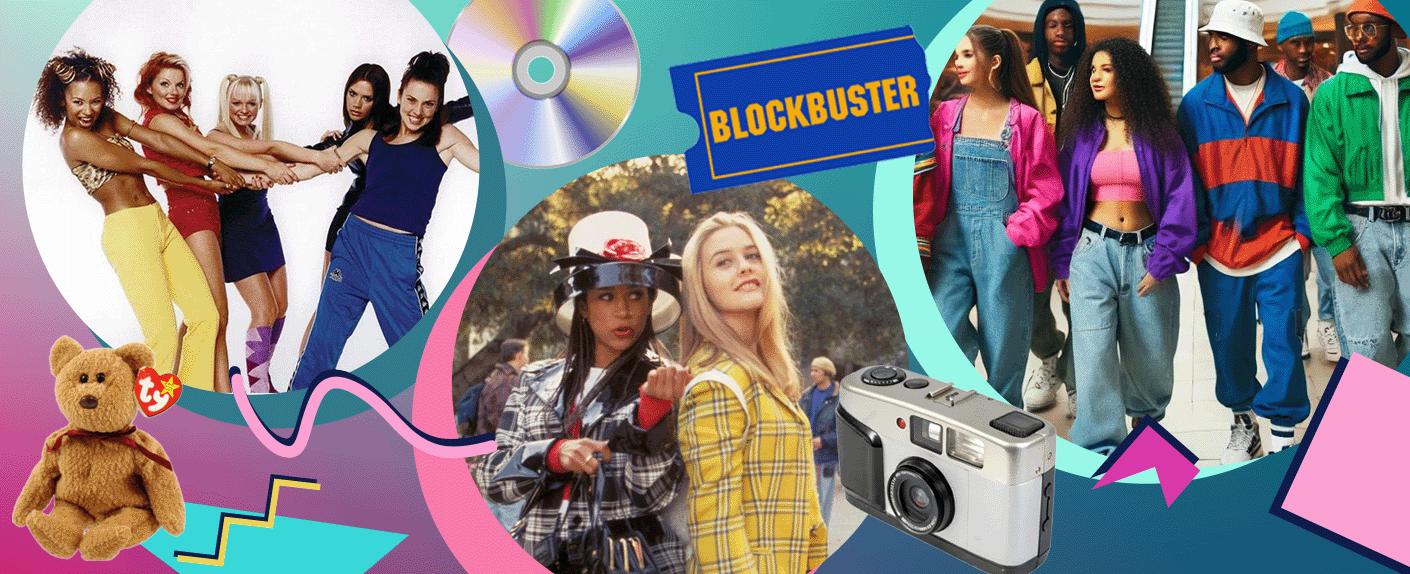
Wide-legged baggy jeans. Corset tops. T-shirts layered over long-sleeves. Chunky sneakers. Tiny sunglasses. Wired headphones. Flash cameras. Cigarettes.
Is it 1996? Or 2026?
Once you spot the iPhone in the early 20-something year-old’s hand, it’s a dead giveaway: we are living in another nostalgia period - and this time, it’s the 90s.
So why exactly is Gen-Z obsessed with the 90s?
There may be more at play here than the “nostalgia cycle” (where every 20-30 years, there is a cultural revival of an era from the past - remember when the 60s came back in the 90s and we got tie-dye and Woodstock ‘94?), and it seems as though escapism may be the answer.
To put it plain and simple - we’ve been living in some tumultuous times in the US.
Without getting into it too much - much of Gen-Z’s days are filled with existential anxiety and dread. They have the feeling that they’ll never make the same achievements their parents did when they were their age. They’re tens of thousands of dollars in debt from college before they even get their foot out the door into the real world. The economy is horrible. The cost of living is too high. Jobs are disappearing. The wealth-gap is growing further by the second. Politicians are not working for the people. AI is taking over. They numb themselves with impulsive social media consumption to help boost dopamine levels.
This is - no matter how you slice it - what Gen-Z is experiencing everyday…and so they’ve simply decided to escape to another timeline the best they can.
For a lot of Gen-Z, they are now the age their parents were in the 90s. A culturally significant time to them indeed, and it has visual evidence to show for it.
That dusty old photo album in your closet or attic is a totally different experience than a photo app on their phone. Not only is it physical media that they can hold and flip through, but it serves as a time capsule - a look into what their parents were like during a time more prosperous and undeniably more chill. They’re able to see what their parents wore for fashion, how they did their hair, what activities they loved doing, and what they embraced culturally.
While Gen-Z grew up in the late 00s and 2010s, they lived with remnants of life in the 90s, without truly experiencing it. Sure, those born in the late 90s and early 00s can remember CD stores, the golden era of the mall, movie theaters, McDonalds toys, and Blockbuster - but they didn’t have it as functioning members of society - and now they miss it.
Seeing these old photos and now-digitized home movies officially looks and feels culturally and aesthetically different to the way we live now…it’s been that long.
Maybe G-Z’ers want to romanticize life before iPhones and streaming ruled the world. As a Gen-Z’er myself, I occasionally flip through YouTube TV just to remember the feeling of channel surfing on cable. I even recently got a Firecracker popsicle from an ice cream truck just to get in touch with my youth.
Media has certainly recognized and helped fuel this 90s revival. Teenage Mutant Ninja Turtles, Ghostbusters, Barbie (who saw mega-commercial success in the 90s), Saved By The Bell, and soon, Buffy the Vampire Slayer - have all seen reboots in recent years. With financial security for studios coming from millennials and older Gen-Z, these nostalgia market classics have been flying off the shelves. Along with this, certain 90s shows have never really disappeared from the public eye. Seinfeld and Friends are now reaching another generation of viewers trying to connect with the past.
Maybe life was a little less stressful in the 90s. Less technology. No Instagram or TikTok. A little more economic prosperity. A lower cost of living.
Is it any wonder why our youth wants to go back to that? What do you think?